

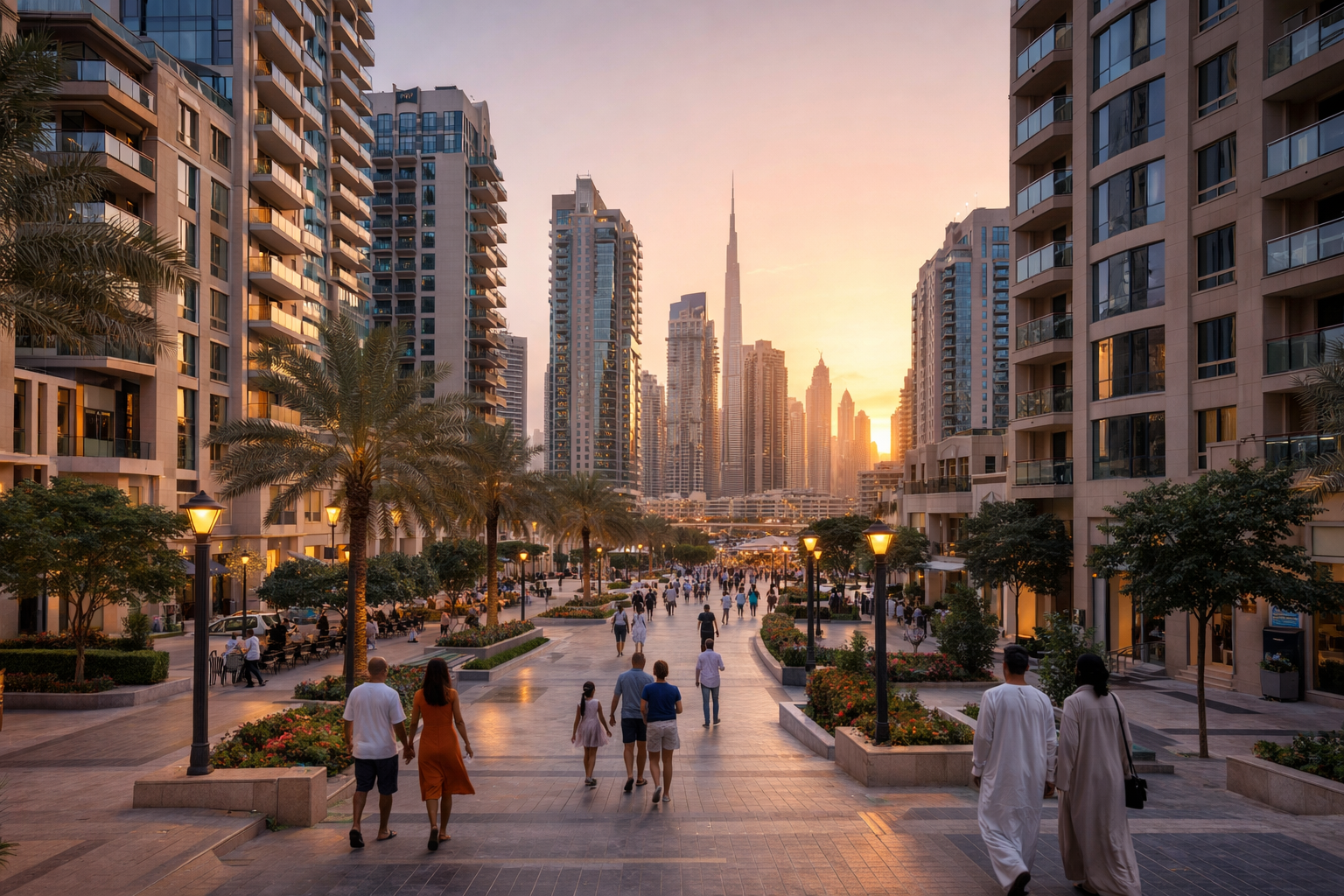
Will Dubai’s Housing Market Face an Oversupply in 2026? A Real Estate Perspective
Dubai’s real estate market continues to adapt as it moves into 2026. While the prospect of oversupply has been widely discussed among analysts and investors, the reality is more nuanced when you look beyond headlines.
- A Significant Wave of New Supply Is Coming
Data suggests a substantial number of residential units are scheduled for completion over the next couple of years. Nearly 55,000 units are expected to be handed over in 2026, with even more deliveries, around 75,000 units, forecast for 2027. Over the longer term, estimates show more than 400,000 homes could be added to the market through 2028.
This increase naturally raises questions among buyers and investors: Could this surge in supply lead to a market imbalance?
- Demand Remains Strong — Absorbing Much of the New Stock
Despite the upcoming deliveries, several factors suggest that Dubai may be well positioned to absorb much of this new supply:
- Robust population growth continues to support housing demand.
- Dubai’s appeal among expatriates and investors remains high, driven by lifestyle, tax benefits, and infrastructure enhancements.
Experts emphasize that strong underlying demand, especially from genuine end-users, often mitigates the risk of large-scale oversupply.
- Oversupply Risk Is Not Uniform Across the City
Oversupply pressures are more likely to appear in select segments, particularly in higher-density apartment communities where deliveries are concentrated. In contrast, villa and townhouse markets continue to show stronger fundamentals due to limited new stock relative to long-term demand.
Analysts also point out that some of the headline “oversupply risk” scenarios are based on launch figures, not actual delivery or handover statistics, meaning the timing and absorption rates can smooth out the anticipated supply wave.
- Prices Are Expected to Stabilize Rather Than Collapse
Rather than a broad market crash, most indicators point toward a more balanced market in 2026. Instead of dramatic price declines, experts predict:
- Stabilized or modest price growth in core areas
- Localized price softness where supply outpaces demand
- Continued strong rents in popular communities
In other words, some neighborhoods may feel pricing pressure, but systemic market collapse is not seen as the prevailing outcome by most analysts.
- What This Means for Buyers and Investors
For savvy property buyers and long-term investors:
- Look at areas with strong end-user demand and limited future supply
- Monitor delivery timelines rather than launch volumes
- Prioritize quality locations and lifestyle-driven communities
Dubai’s market is maturing. Supply growth is part of a broader cycle, one shaped as much by absorption capacity and population dynamics as by sheer volume.
✅ Key Takeaway
Dubai’s housing market in 2026 is expected to experience a healthy rebalancing, with new supplies coming online but also solid demand to absorb much of it. Rather than an outright oversupply crisis, the market looks set for normalization and selective cooling, opening strategic opportunities for informed investors and homeowners alike.
